
For Lexember this year, I’m using my Conlang Year language of 2025, Nómàk’óla, and writing out a recipe, step by step, with new vocabulary for each day of the month.
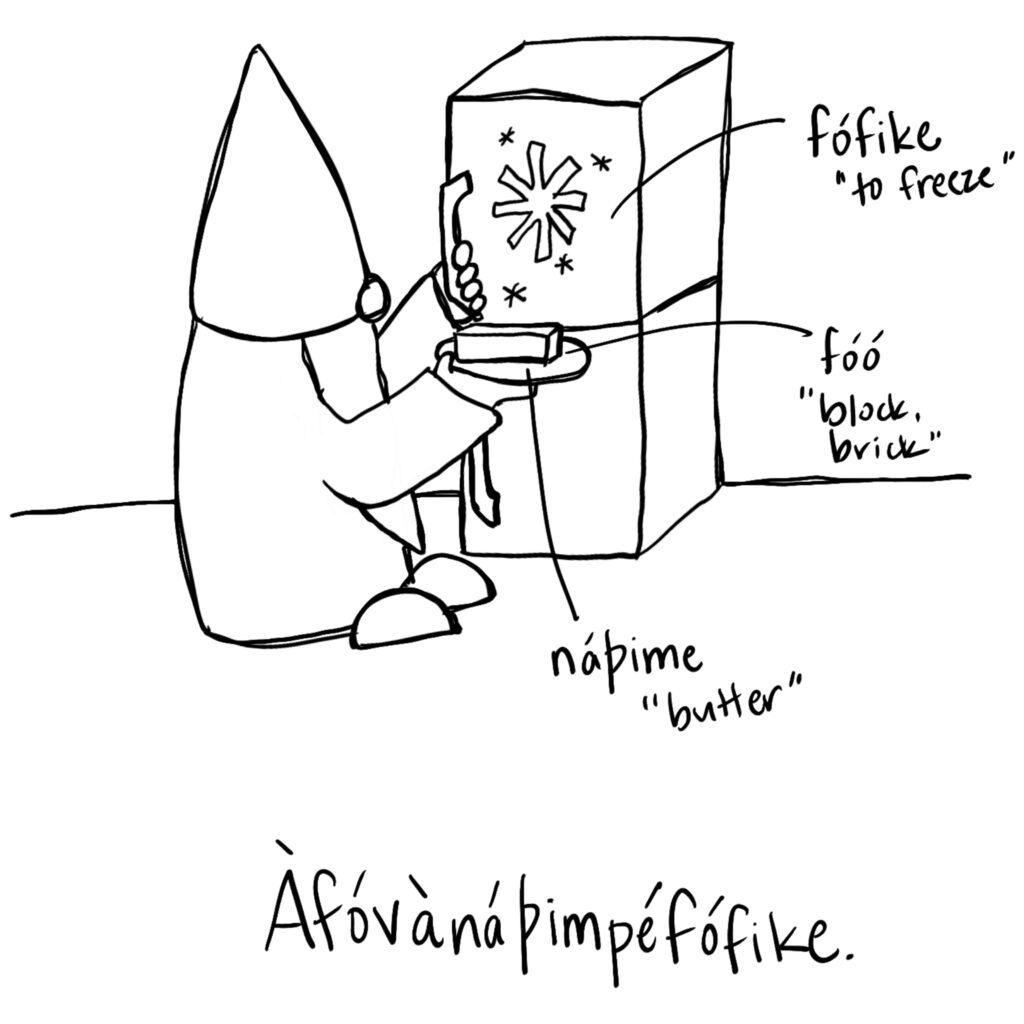
Àfóvànáþimpéfófike. “Freeze a stick of butter.”
The new vocabulary I created for this bit of the recipe includes three new words. Fóó best translates as “brick” or “block,” but in this case refers to a unit of butter, and in English we call it a stick. Náþime is “butter” and is a compound meaning “fat milk” or “fatty milk” (náþe is “milk” and líme is “fat, grease”). The verb fófike means “to freeze,” which is the causative form of the intransitive verb fíke “to freeze”.
Each step of direction presented this month will feature the pé(p)- prefix on the verb, indicating an imperative form. Imperative forms do not take any agreement suffixes, so the subject is implied rather than stated.
Many steps will also incorporate a direct object of the verb, which co-occurs with the à- (or às-/àh-) prefix.
In this particular example, the “stick of butter” is an appositional noun phrase, so each noun is marked with the object marker, one occurring directly after the other. It could be more literally translated as “freeze a butter brick.”