
An image with multiple ways of saying "hello" and "welcome" in a variety of conlangs

Conlang Year

Conlanging can be overwhelming for even the most experienced conlangers—especially in the beginning stages of a new project when swirling swarms of ideas create a flurry of possibilities. I break the process down into daily prompts for a yearlong experience. One year, one conlang. Join me in making this a Conlang Year!

  • Lexember 14 for Nómàk’óla

    Lexember 14 for Nómàk’óla

    Àsèwétipétólsìnómise. Àsólèšỳŋúènáþimpé’áse. “Place apples in skillet. Add two tablespoons of butter.” While this entry is a bit hefty, it consisted primarily of units I already had in the language. In fact, the only new word I needed was nómise “skillet, pan”, which is a compound of nófo “pot” and míse “short”. It delights me to…

  • Lexember 13 for Nómàk’óla

    Lexember 13 for Nómàk’óla

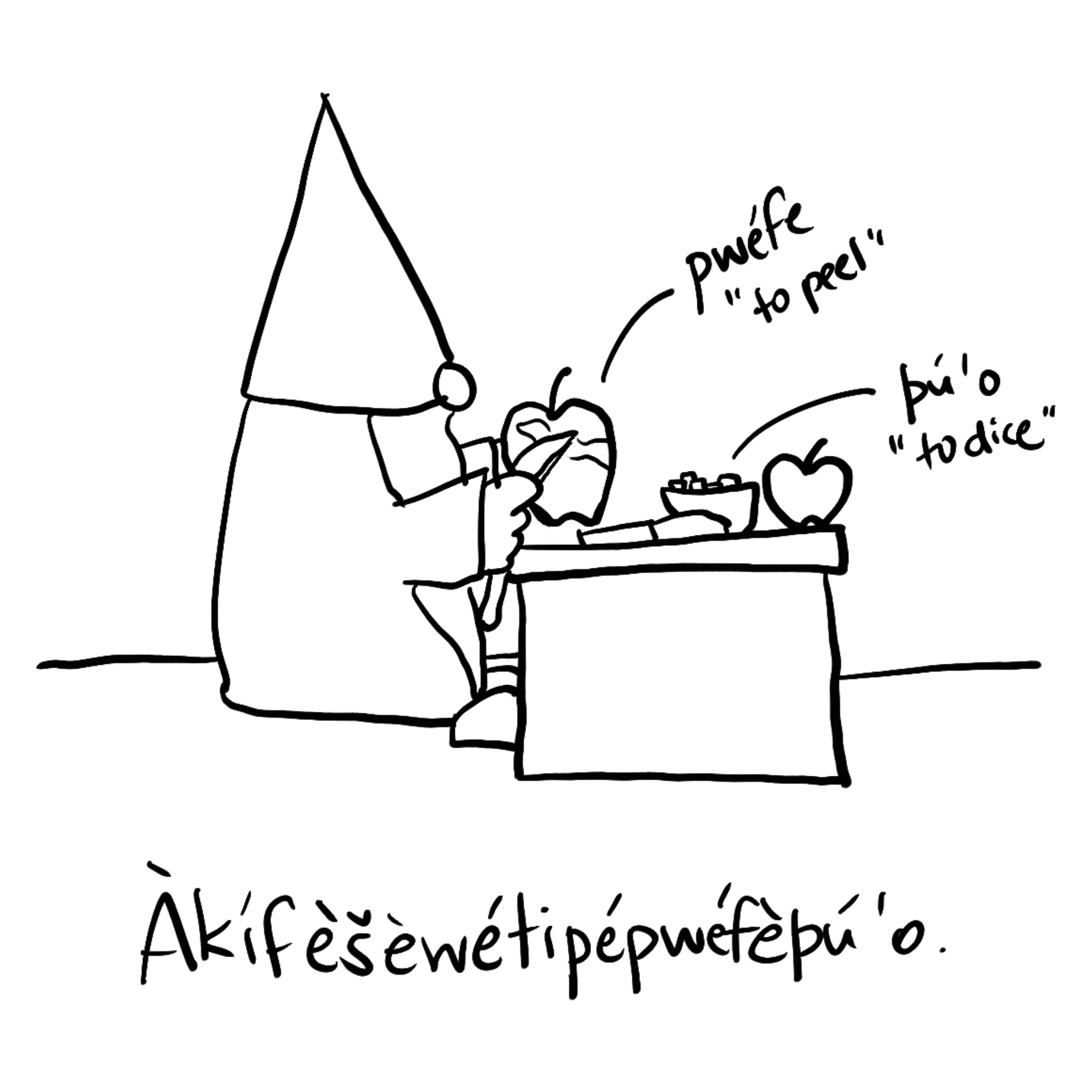
    Àkífèšèwétipépwéfèþú’o. “Peel and dice three apples.” I decided to create the root éti that originally referred to any tree fruit but then because apples were the most common, the word narrowed to refer to apples more specifically. Now if you want to refer to tree fruits in general, you use the reduplicated éčeti. This isn’t…

  • Lexember 12 for Nómàk’óla

    Lexember 12 for Nómàk’óla

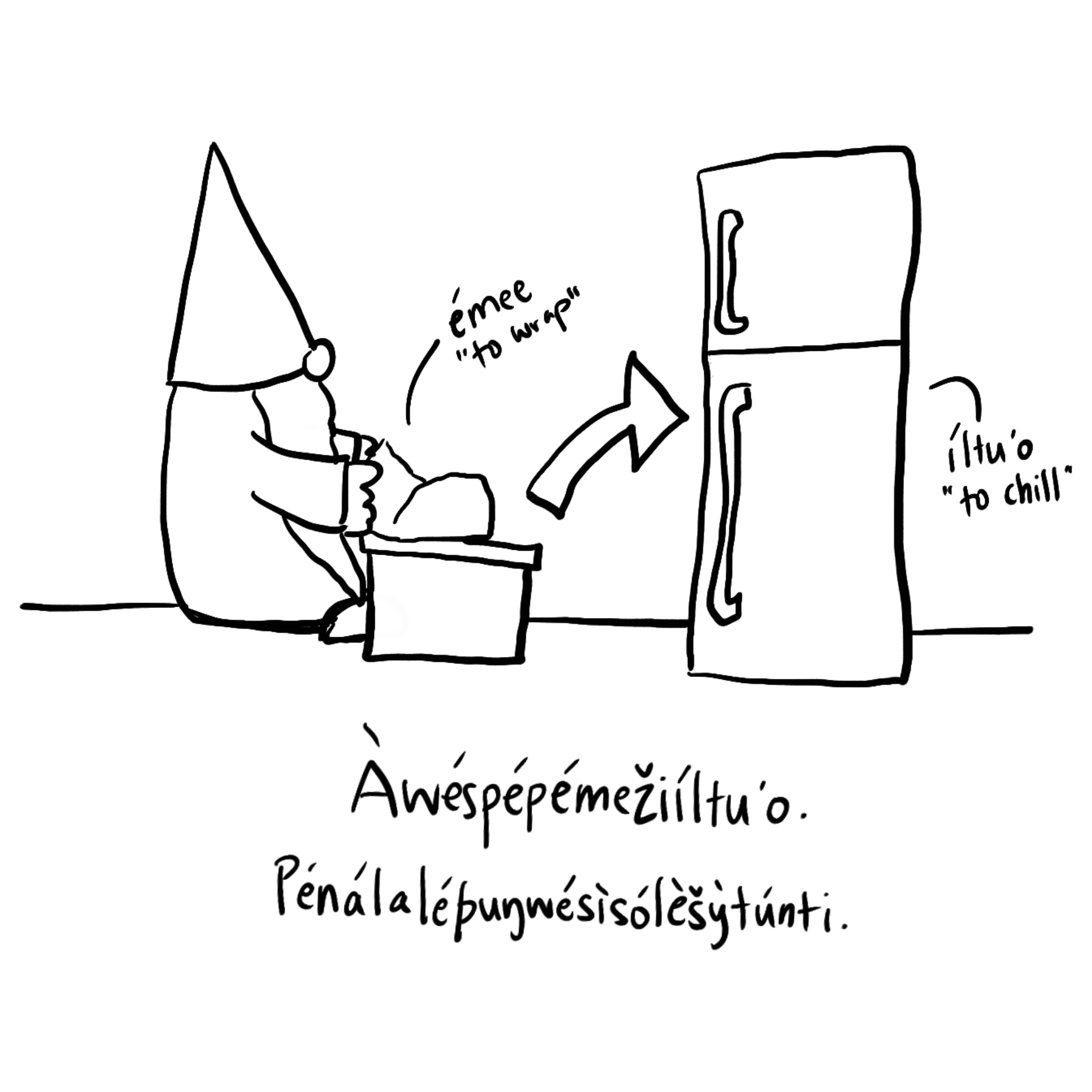
    Àwéspépémežiíltu’o. Pénálaléþuŋwésìsólèšỳtúnti. “Wrap and chill the dough. Let it rest for at least two hours.” Today’s entry required quite a few new pieces in the language! I needed verbs for “wrap” and “chill”. For “wrap”, I created the root méé, meaning “blanket”, and then added the instrumental verbal derivation to create émee “to wrap, to…

  • Lexember 11 for Nómàk’óla

    Lexember 11 for Nómàk’óla

    Àwéspéfíítsìjúnase. “Shape the dough into a disc.” Today’s entry makes use of two new forms introduced yesterday. The object of this clause is wése “dough, batter”. You may recall, though, that I used wémvale “dough” to specify that the baker needs to have a solid dough. Since the more specific “dough” was established in context…

  • Lexember 10 for Nómàk’óla

    Lexember 10 for Nómàk’óla

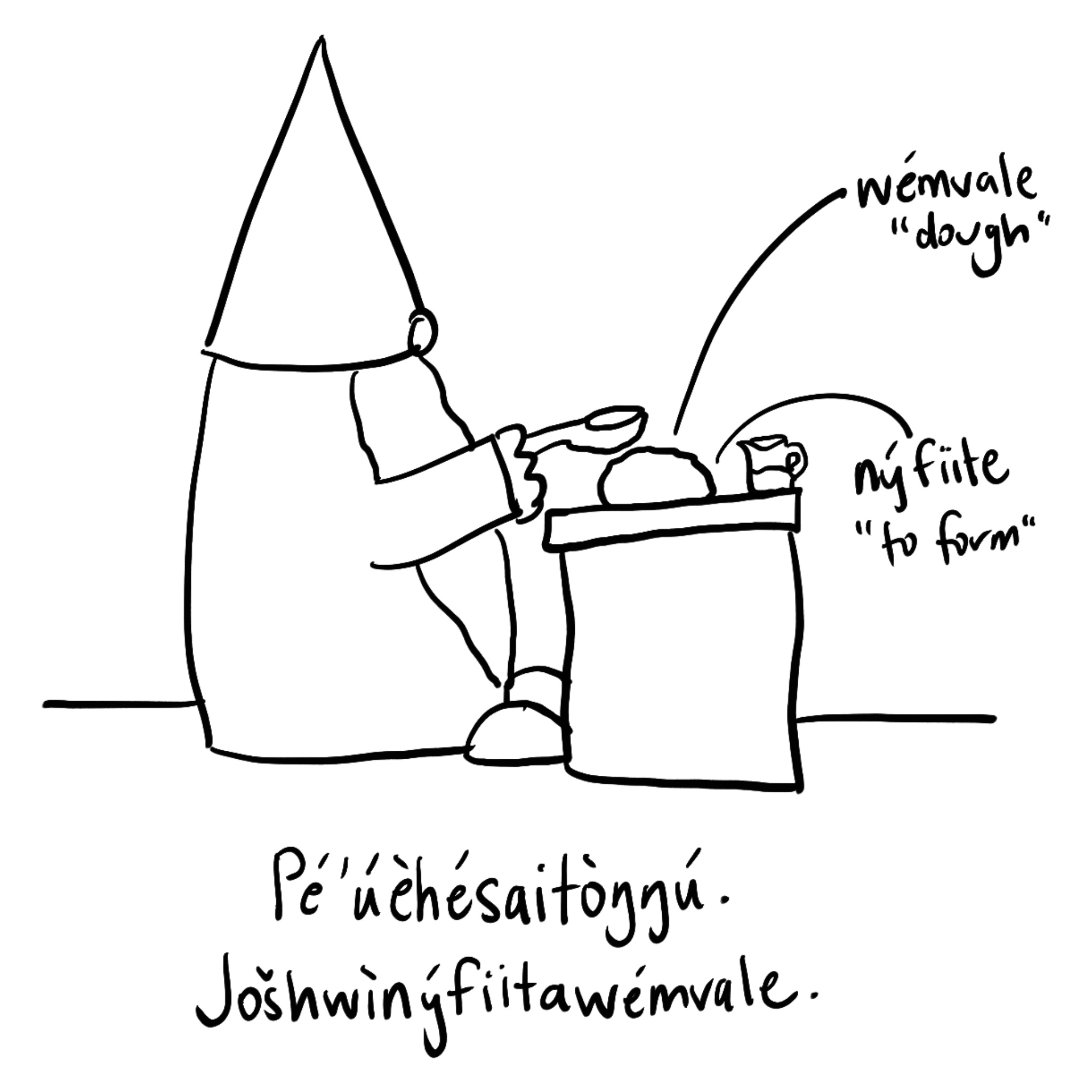
    Pé’úèhésaitòŋŋú. Jošhwìnýfiitawémvale. “Keep adding water by the tablespoon until dough forms.” Today’s entry required thinking through several new features and words, which is exciting! Especially since, unlike yesterday, I had the time and mental space to work through such things (it was quite fortuitous that yesterday’s entry went so quickly for me). The first was…

  • Lexember 9 for Nómàk’óla

    Lexember 9 for Nómàk’óla

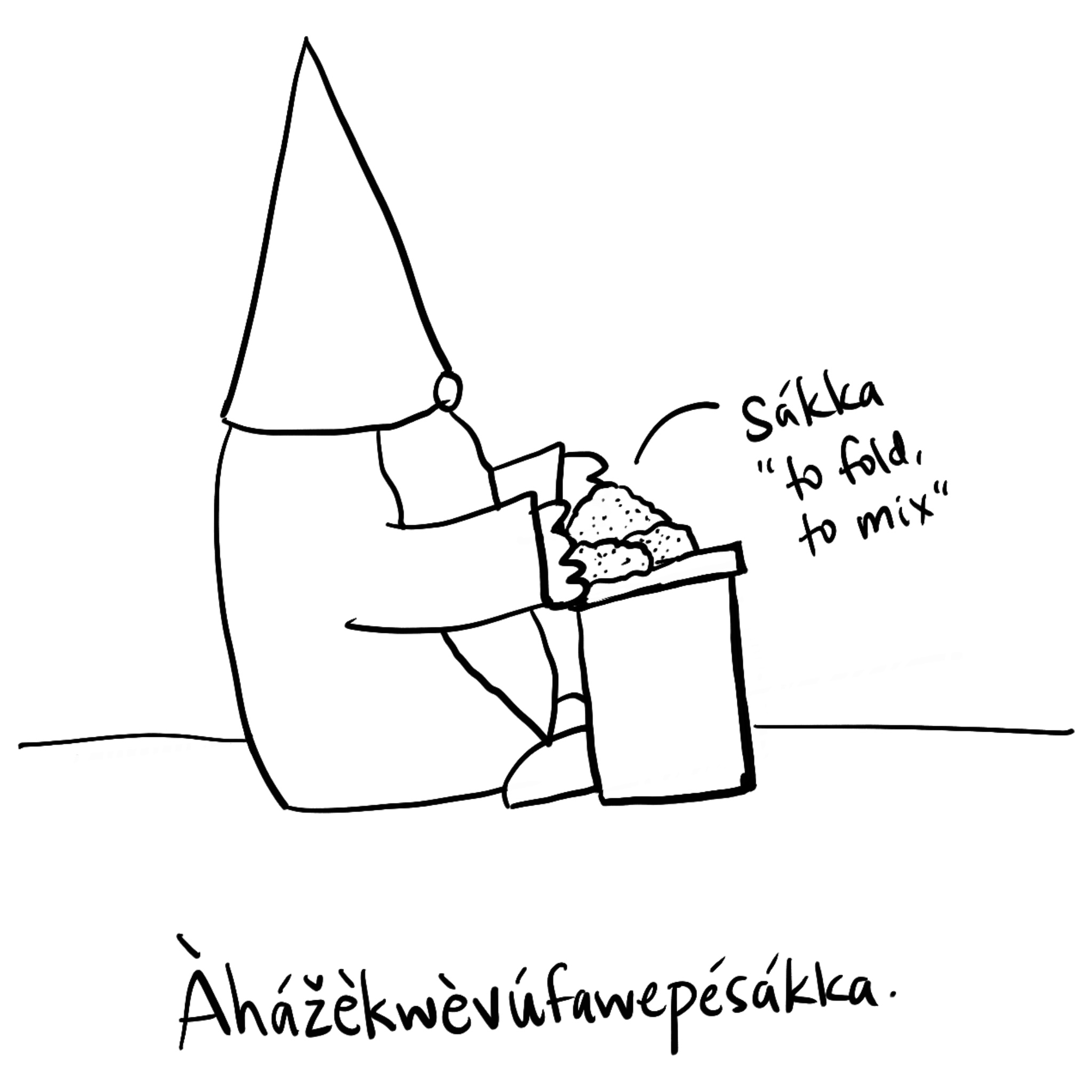
    Àhážèkwèvúfawepésákka. “Fold the water into the dry ingredients.” I absolutely translated it with “fold” because of Schitt’s Creek and the folding in the cheese scene. The verb sákka “to mix, to fold” is based on sáhe “to mix, to jumble” and incorporates the reiterative derivation to indicate a mixing that requires repetitive motions. All the…

  • Lexember 8 for Nómàk’óla

    Lexember 8 for Nómàk’óla

    Àhájàtúppépákkasìsólèšỳŋú. Àsèvúfawepépésai. “Measure two tablespoons of cold water. Pour the water onto the dry ingredients.” Nómàk’óla tends to separate heavy pieces of information into multiple clause structures, and something like “two tablespoons of cold water” turns into a rather chunky noun phrase with multiple nominal modifiers. And so today’s bit of directions was split into…

  • Lexember 7 for Nómàk’óla

    Lexember 7 for Nómàk’óla

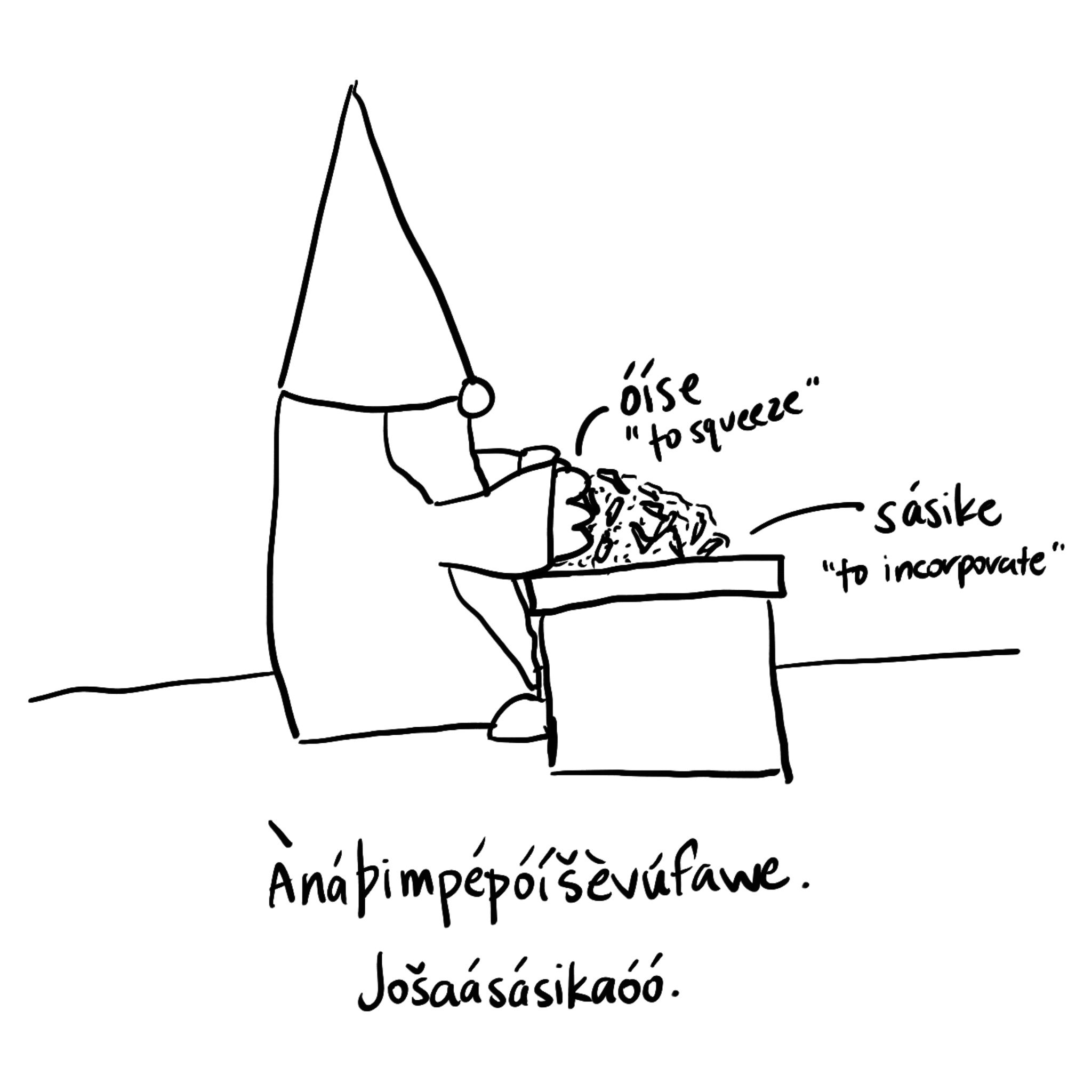
    Ànáþimpépóíšèvúfawe. Jošaásásikaóó. “Squeeze the butter into the dry ingredients until it is fully incorporated.” The first clause introduces a word not yet seen this month: óíse means “to squeeze”. Nómàk’óla uses the introductory još- to indicate a clause is dependent on a prior clause, and context will indicate how to best interpret the relationship among…

  • Lexember 6 for Nómàk’óla

    Lexember 6 for Nómàk’óla

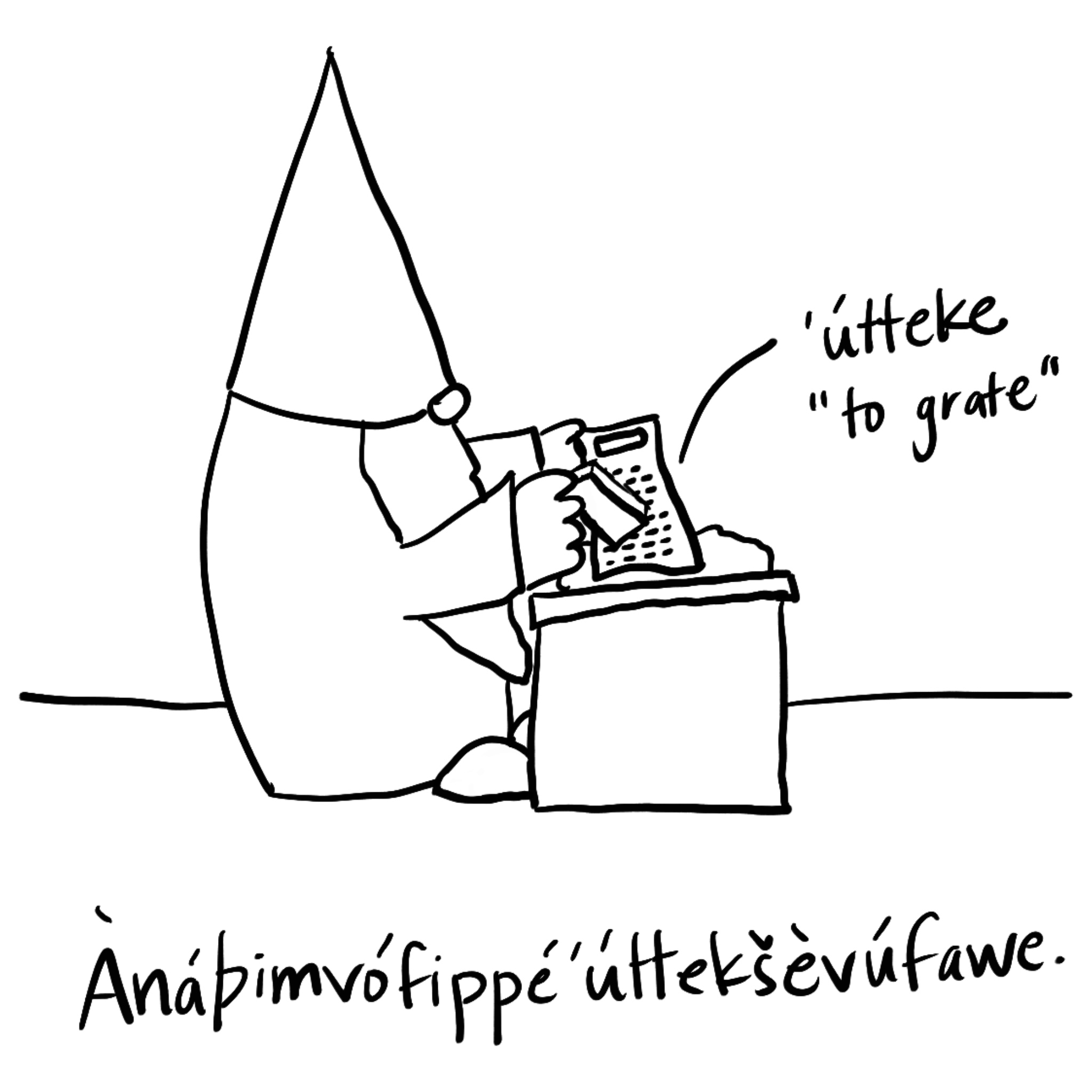
    Ànáþimvófippé’úttekšèvúfawe. “Grate the frozen butter into the dry ingredients.” I only needed two new pieces to complete today’s translation. The first is an adjectival form of fíke “to freeze” (a verb I already had), using a quality derivation (which I also already had): vófike means “frozen”. I also needed a word for “to grate” and…

  • Lexember 5 for Nómàk’óla

    Lexember 5 for Nómàk’óla

    Àsèvúfawepésáhe. “Mix together the dry ingredients.” I created a basic root meaning “to mix” or “to jumble” and decided that, while English often uses the adverb “together” in instances like these, the verb sáhe would be enough to get the meaning across in Nómàk’óla on its own. The word èvúfawe is the plural form of…