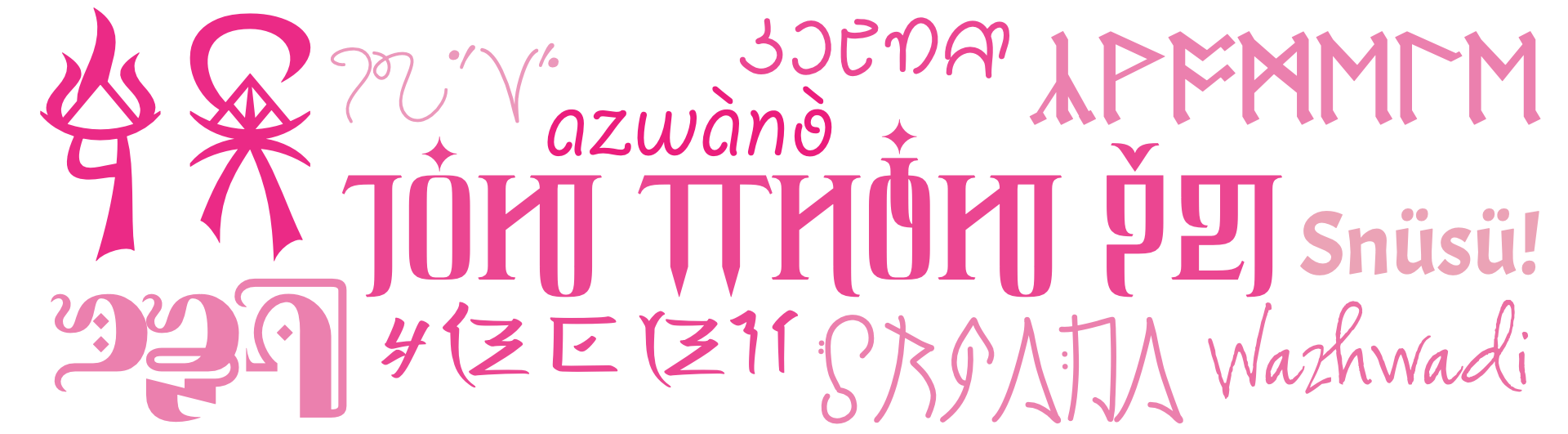
An image with multiple ways of saying "hello" and "welcome" in a variety of conlangs

Conlang Year

Conlanging can be overwhelming for even the most experienced conlangers—especially in the beginning stages of a new project when swirling swarms of ideas create a flurry of possibilities. I break the process down into daily prompts for a yearlong experience. One year, one conlang. Join me in making this a Conlang Year!
  • Lexember 5 for Nómàk’óla

    Lexember 5 for Nómàk’óla

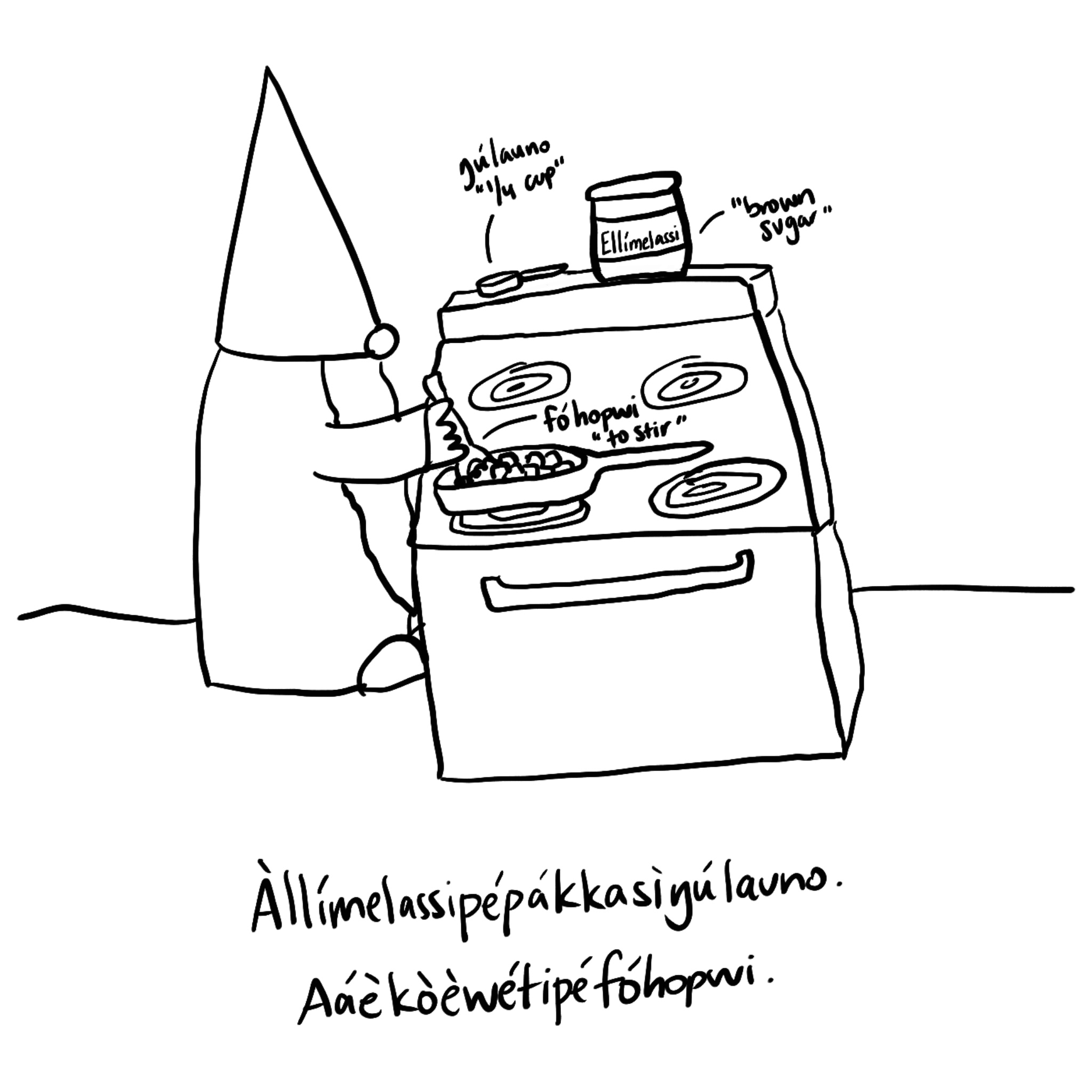
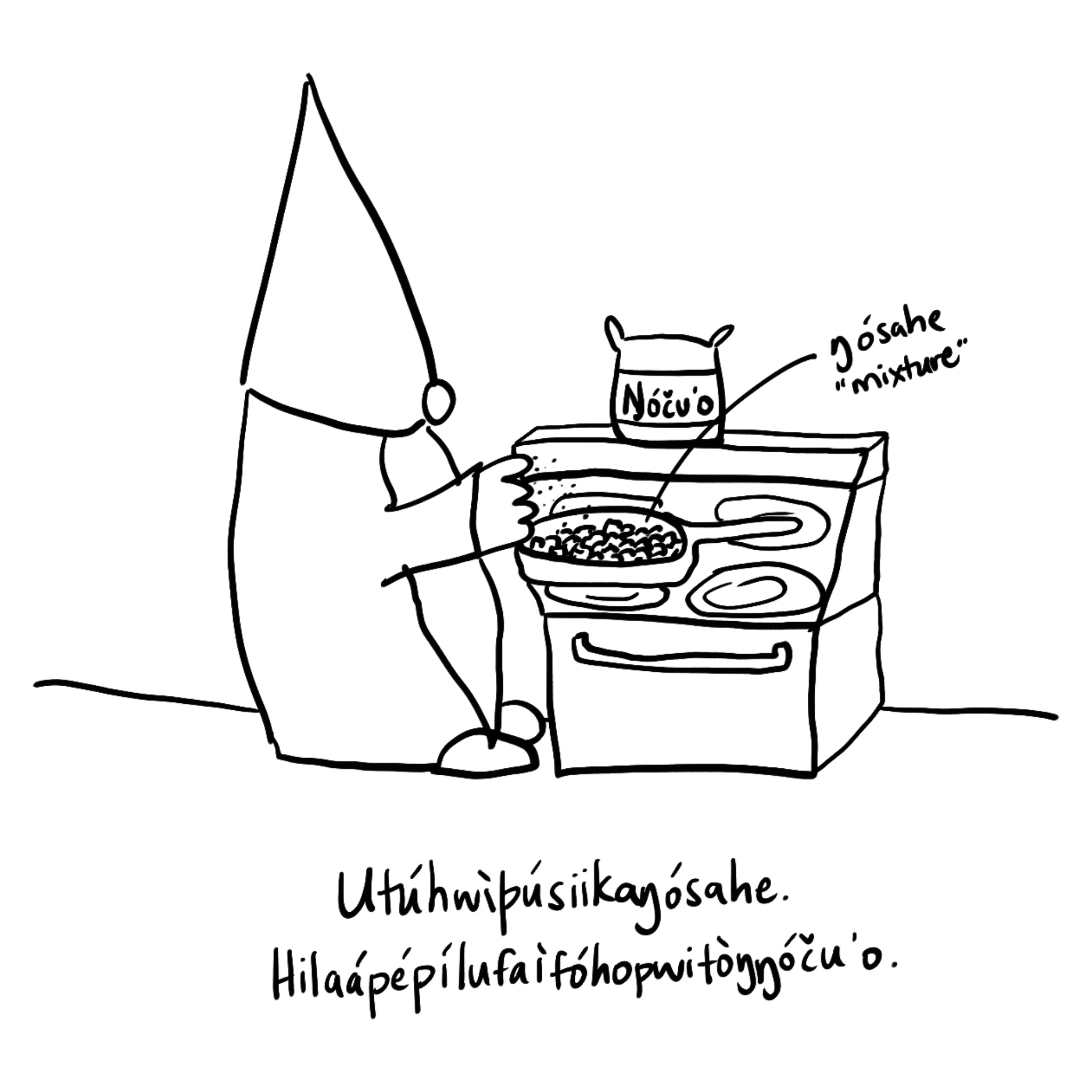
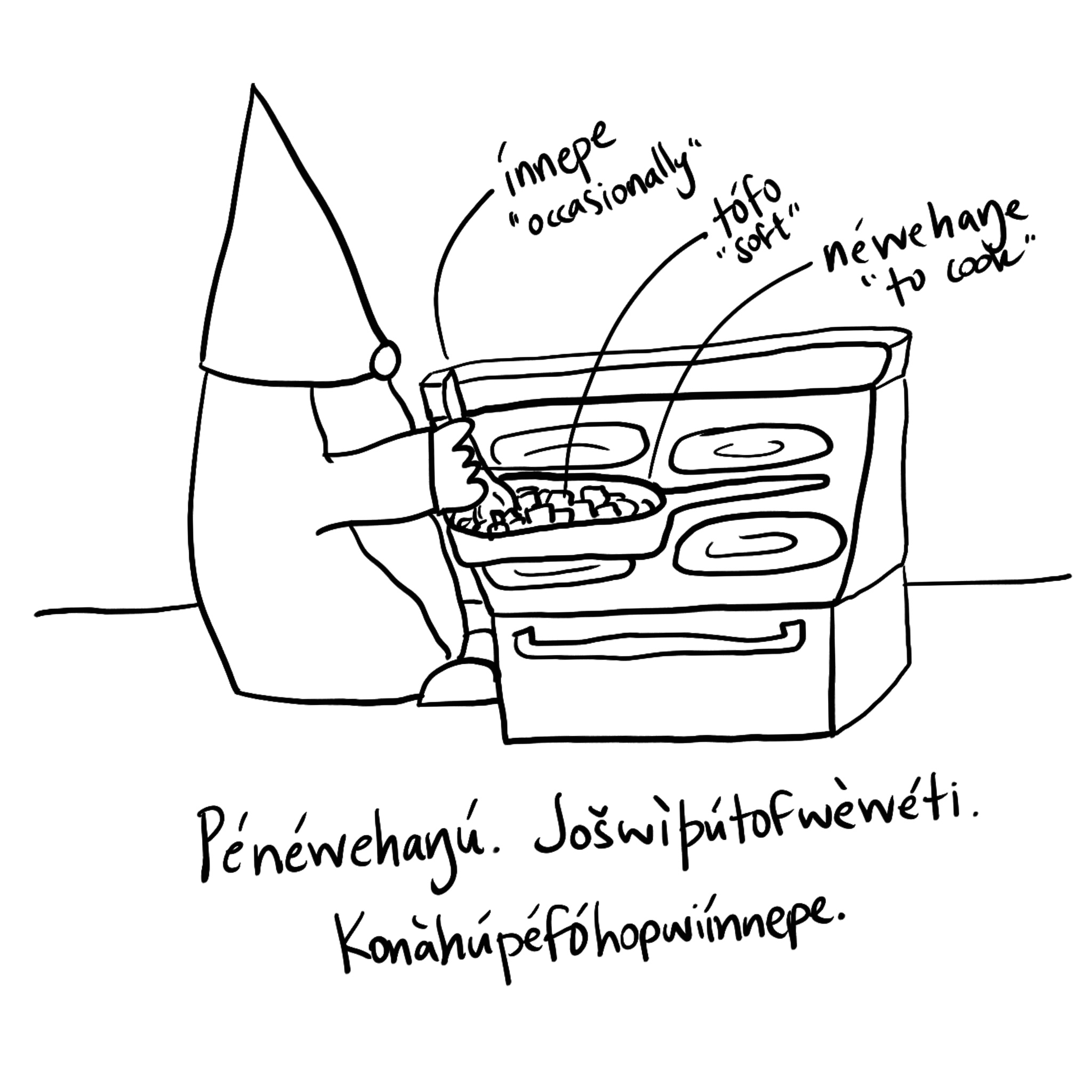
    Àsèvúfawepésáhe. “Mix together the dry ingredients.” I created a basic root meaning “to mix” or “to jumble” and decided that, while English often uses the adverb “together” in instances like these, the verb sáhe would be enough to get the meaning across in Nómàk’óla on its own. The word èvúfawe is the plural form of…

  • Lexember 4 for Nómàk’óla

    Lexember 4 for Nómàk’óla

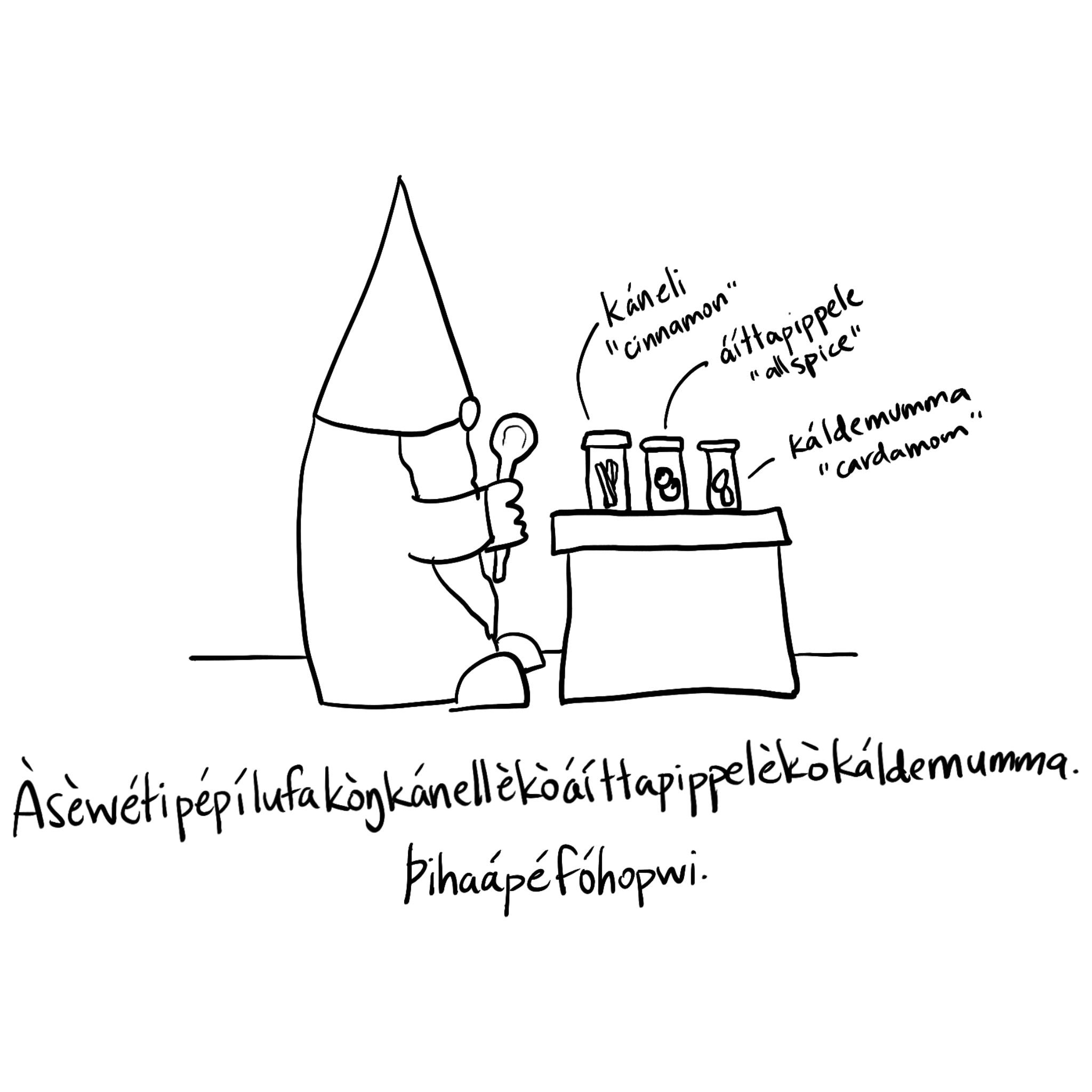
    Konàháíttapippelèkòkánelipéþólsìŋóču’o. “And sprinkle allspice and cinnamon over the flour, too.” Today’s featured sentence only needed two new words: allspice and cinnamon. Because these spices are not native to the Finland area where my nisse speakers live, these words were borrowed. The word káneli “cinnamon” was directly borrowed from Finnish (also kaneli) while the word for…

  • Lexember 3 for Nómàk’óla

    Lexember 3 for Nómàk’óla

    Àhópžèllíssuuppéþólsìŋóču’o. “Sprinkle a teaspoon of sugar over the flour.” This sentence makes use of two words I created yesterday: hóppi “teaspoon” (which comes from the word “spoon,” a diminutive form of hópo “bowl”) and ŋóču’o “flour”. The form hóppi is affected by sound changes in the phonological environment of the full clause structure, where the…

  • Lexember 2 for Nómàk’óla

    Lexember 2 for Nómàk’óla

    Àséssetikèŋóčuppépóttiipàúho. “Pour 2 cups of flour onto a surface.” For today’s entry, I needed to think through how the nisse would measure ingredients, and I decided they would have their own system. Who needs the metric system, anyway? I created units based on how they might gather/measure ingredients, including the word éssetike “basket” being used…

  • Lexember 1 for Nómàk’óla

    Lexember 1 for Nómàk’óla

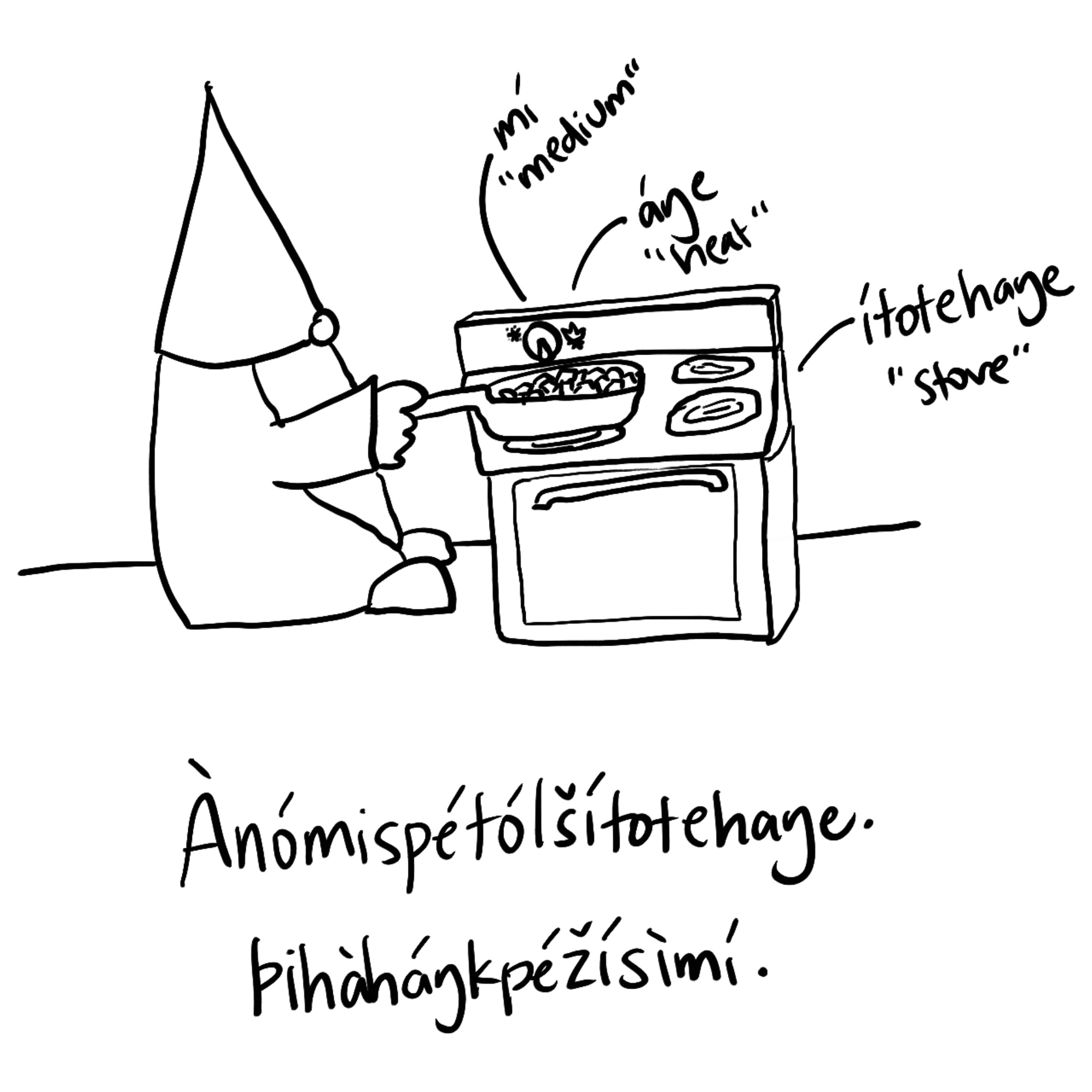
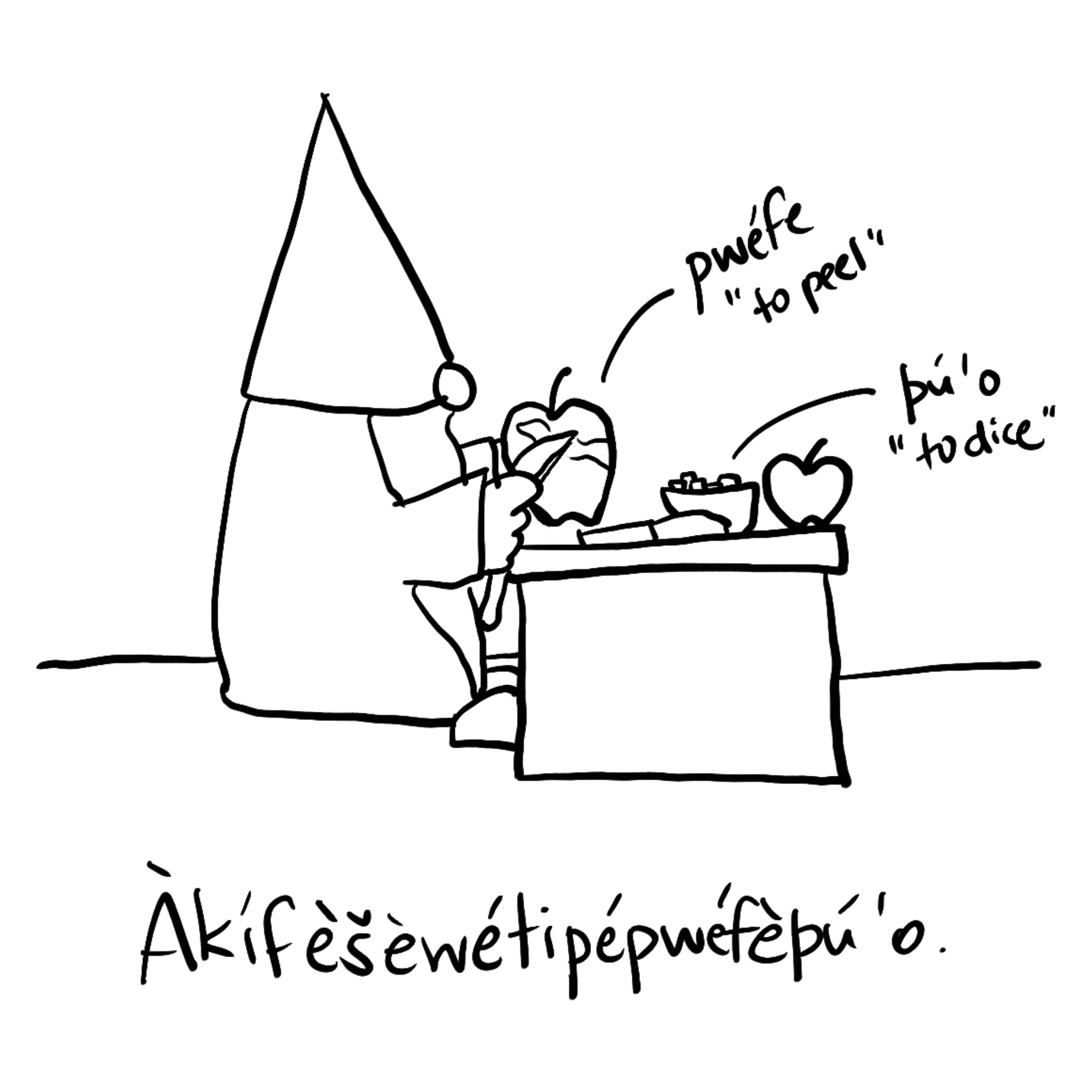
    For Lexember this year, I’m using my Conlang Year language of 2025, Nómàk’óla, and writing out a recipe, step by step, with new vocabulary for each day of the month. Àfóvànáþimpéfófike. “Freeze a stick of butter.” The new vocabulary I created for this bit of the recipe includes three new words. Fóó best translates as…

  • Nómàk’óla Numbers

    Nómàk’óla Numbers

    I spent quite a bit of time figuring out numbers and how they work in Nómàk’óla (i.e. NisseLang). The nisse have a base-5 counting system. As a general practice, they count on one five-fingered hand (to keep the other hand free!), and as they count, they raise a finger. When they hit five, they put…

  • NisseLang Gets a Name!

    During today’s very fruitful conlanging session, I gave NisseLang a language name! The language name is Nómàk’óla, which means “voice of the Northern Lights” and connects with the nisse lore that they come from the Northern Lights. The speakers refer to each other as nísse, which comes from an old compound meaning “guardian” (they view…

  • NisseLang Passive Construction

    After taking a little hiatus from my NisseLang project as I worked on other languages, I returned to my document today to refamiliarize myself with the language and to build more features for it. As a bit of cleaning up, I made some edits to the bipersonal-marking chart for the verbs (previously, I had kept…

  • NisseLang Word Order

    NisseLang Word Order

    In its modern form, NisseLang is a highly synthetic OVS language with head-initial tendencies. In its proto-forms, NisseLang was VSO and more isolating. I mapped out the journey from its earliest stages to modern forms in seven major stages, using the sentence “I threw a rock” to demonstrate the grammatical evolution. The modern from of…

  • NisseLang v. Wokuthízhű sounds

    NisseLang v. Wokuthízhű sounds

    I mentioned the similarities between the NisseLang and Wokuthízhű sound inventories (specifically focusing on the modern sounds), which prompted me to make a chart to see just how similar the inventories are. The verb inventories absolutely match with one caveat: for each vowel quality, NisseLang has a short-long distinction where Wokuthízhű does not. The vowel…